Wondrous Goggles
A multisensorial research prototype exploring how simulated low vision, audio storytelling and reflection could help people understand navigation and spatial perception for people who are blind or have low vision.
Published in Transforming our World through Universal Design for Human Development
A Multisensorial Storytelling Design Strategy to Build Empathy and a Culture of Inclusion
Overview
Wondrous Goggles was a QUT research project led by Dr Janice Rieger, with Marianella Chamorro-Koc and the research team, exploring how multisensorial storytelling could help people understand the navigation and spatial perception of people who are blind or have low vision.
The project formed part of the broader Vis-ABILITY / Design for All context and was connected to exhibition and public engagement work around accessibility, inclusion and design. The prototype combined simulated low vision, audio narration from someone with lived experience, and a reflection mechanism for the wearer.
Challenge
Simulating impairment can be powerful, but it can also be misleading. If a sighted person only experiences confusion or helplessness, the simulation may reinforce pity rather than understanding.
The challenge was to move beyond a simple vision loss simulator and create a guided, multisensorial experience that connected the wearer to lived experience, navigation strategies and reflection.
The experience
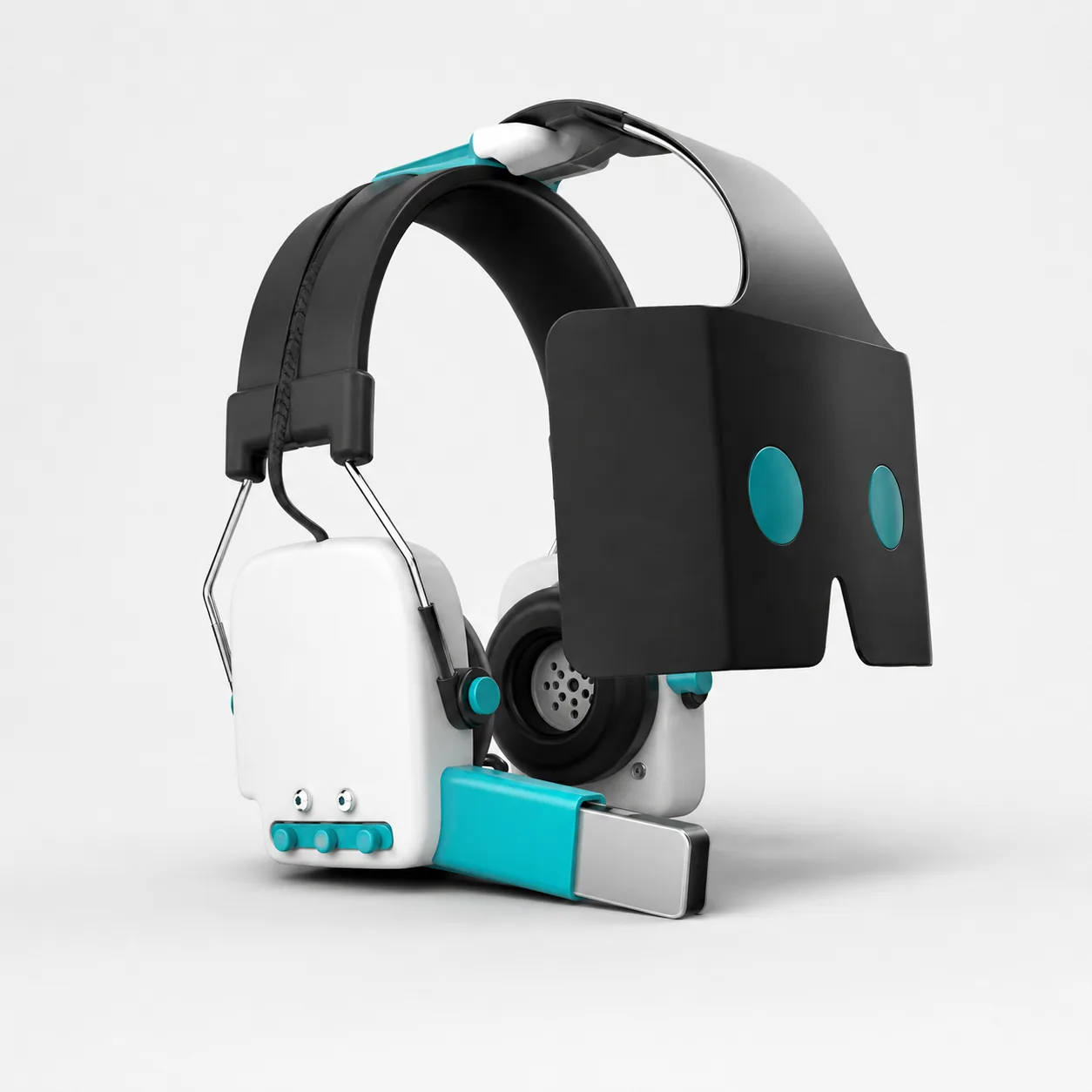
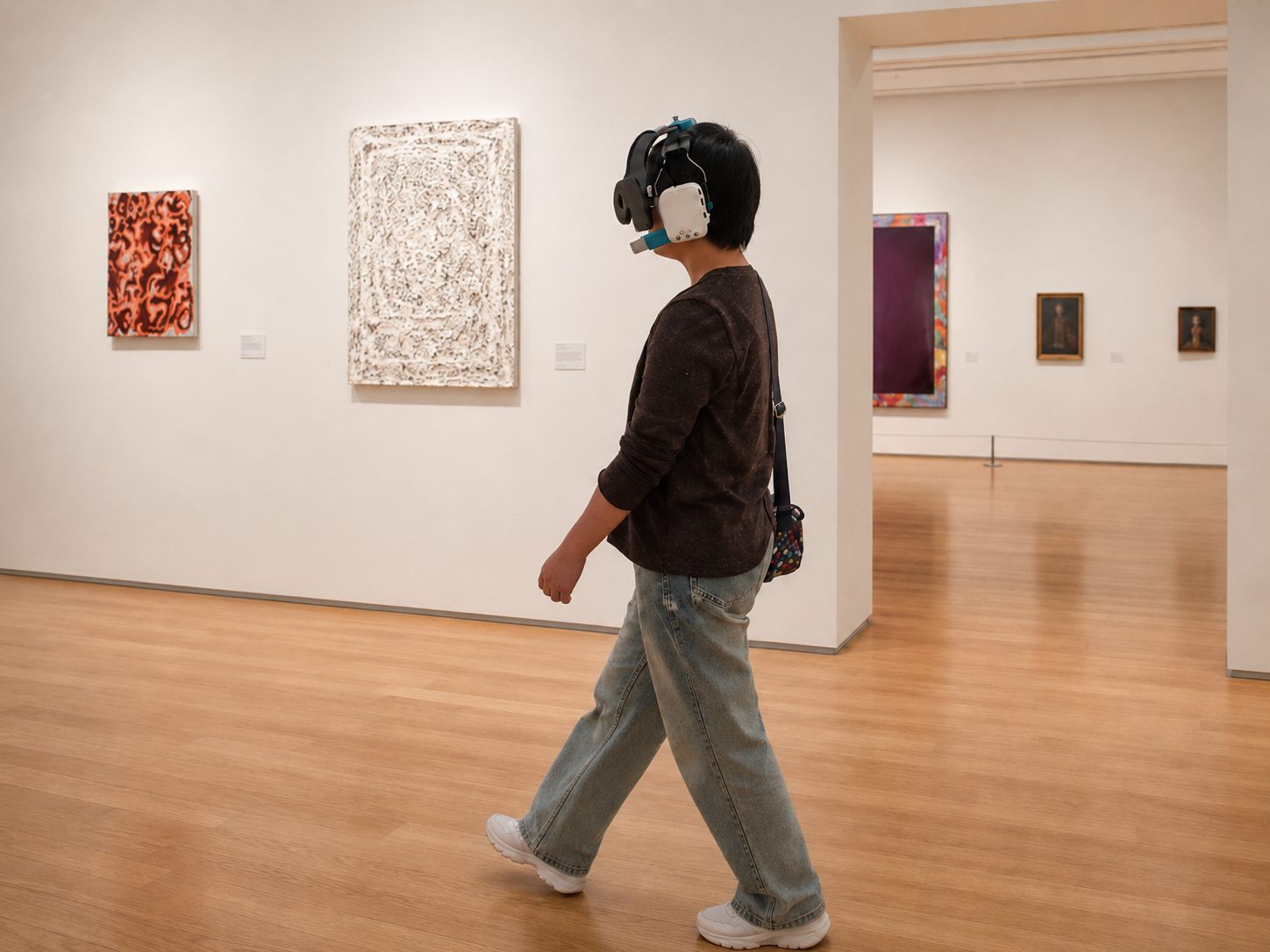
The Wondrous Goggles combined a low-vision simulation with headphones and audio storytelling. The wearer moved through a space while listening to narration from someone who is blind or has low vision, then had the ability to record reflections during or after the experience.
This made the prototype less about reproducing disability as an effect and more about helping stakeholders understand how public spaces are navigated, sensed and interpreted differently.
What I researched and designed
- Research into visual impairment simulation
- Exploration of AR, VR and optical approaches
- Multisensorial storytelling strategy
- Accessibility and empathy framing
- Experience concept development
- Prototype direction and design support
- Reflection / voice memo interaction concept
- Research presentation and design recommendations
Recognition
Wondrous Goggles was part of the Vis-ABILITY / Design for All body of work recognised with an IAUD International Design Award Gold Award in 2022. The recognition supports the project's broader aim: using design and multisensorial storytelling to build more inclusive understanding of public spaces.
What this shows
Wondrous Goggles shows an important part of my design thinking: experience is powerful, but it needs to be framed carefully. A simulation can make something feel concrete, but without the right context it can lead people to the wrong conclusion.
The project reinforced a principle that still guides my work: a powerful experience needs the right frame. Without context, a simulation can lead to the wrong conclusion. With the right structure, it can support more careful understanding.
The audio narration and reflection layer helped move the experience toward understanding rather than pity. This connects directly to my broader work: using interaction, sensory context and guided experience to help people understand complex human situations more clearly.
Relevance now
The project connects to my current practice because it sits at the intersection of simulation, learning, accessibility and guided interpretation. It reinforced the need to design the frame around an experience: what the participant is asked to notice, what context they are given, and what understanding the experience is meant to support.
That same thinking now applies across my work with digital layers, visitor experiences, learning tools and public-facing systems.
Project Images